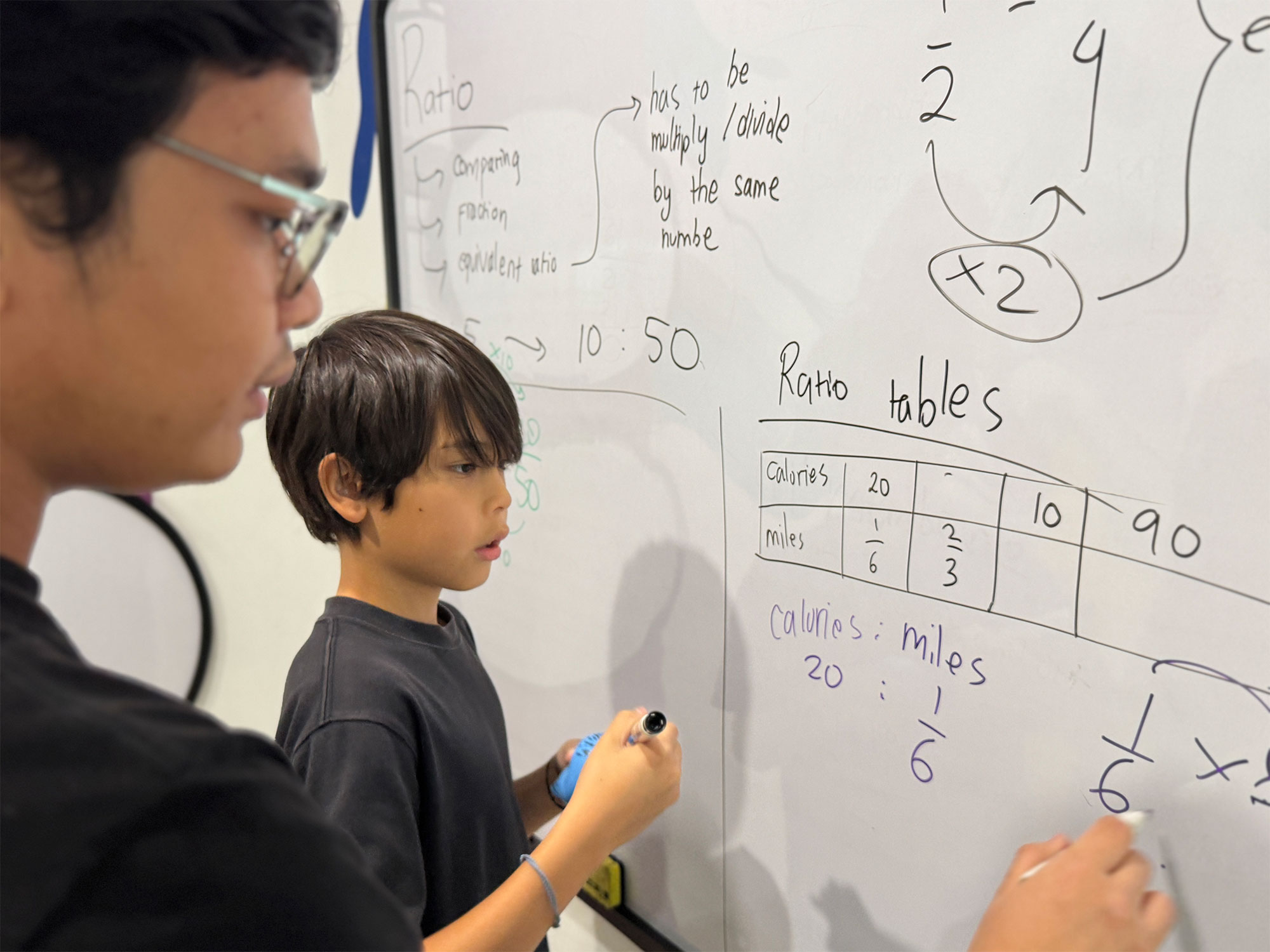
The Real Reason Math Becomes Difficult After Primary School
Many students do well in Math during their early school years, only to find that it becomes significantly more challenging as they move into middle school and beyond. This shift can feel sudden. A student who once felt confident may begin to struggle, lose interest, or even develop anxiety around the subject.
While it is often assumed that the material simply becomes “harder,” the reality is more nuanced. The difficulty comes from how Math evolves, not just what is being taught. Understanding this shift helps parents and students address challenges more effectively before they become long-term obstacles.
The Move from Concrete to Abstract Thinking
In primary school, Math is largely concrete. Students work with numbers they can easily visualize, such as counting objects, basic operations, and simple fractions. These concepts are often supported by visual aids and real-life examples.
As students progress, Math becomes more abstract. They are introduced to algebra, variables, formulas, and multi-step problem-solving. Instead of working with visible quantities, they must think conceptually and apply rules to unfamiliar situations.
For many students, this transition is not immediate or intuitive. Without a strong foundation, abstract concepts can feel disconnected and confusing.
Gaps That Go Unnoticed
One of the most common reasons students struggle with Math later on is that small gaps from earlier years were never fully addressed. Because Math is cumulative, each new topic builds on previous knowledge.
For example, a student who is slightly unsure about fractions may still manage to complete basic tasks. However, when those same concepts are required for algebra or more advanced problem-solving, the uncertainty becomes a barrier.

These gaps often go unnoticed at first. Students may continue to follow along in class, but with increasing effort and decreasing confidence. Over time, this leads to frustration and avoidance.
Increased Pace and Expectations
As students move into higher levels, the pace of teaching often increases. Teachers are required to cover more material in less time, leaving less room for repetition or individual clarification.
At the same time, expectations shift. Students are no longer just expected to solve problems; they are expected to explain their reasoning, apply concepts in new contexts, and approach unfamiliar questions independently.
For students who are still trying to solidify their understanding, this can feel overwhelming.
The Role of Confidence in Math
Math is a subject where confidence plays a significant role. A student who feels capable is more likely to attempt challenging questions, persist through difficulty, and learn from mistakes.
On the other hand, repeated struggles can quickly lead to self-doubt. Students may begin to believe they are “not good at Math,” which affects their willingness to engage with the subject. This mindset often becomes a bigger obstacle than the content itself.
Building a Stronger Foundation
Addressing these challenges requires going back to the fundamentals. Strengthening core concepts, even if they seem basic, often unlocks a student’s ability to understand more advanced material.
Effective strategies include:
Revisiting foundational topics to ensure clarity
Practicing a variety of problem types to build flexibility
Breaking down complex questions into manageable steps
Encouraging consistent, gradual progress rather than rushing ahead
This approach helps rebuild both understanding and confidence.

How Tutoring Can Help
For students who are struggling with the transition to more advanced Math, structured support can make a significant difference. Tutoring provides the opportunity to identify gaps, adjust the pace of learning, and reinforce concepts in a more focused setting.
At A for Effort, Math tutoring is designed to address both understanding and application. Lessons focus on building strong foundations, developing problem-solving skills, and helping students approach challenges with greater confidence. By working at the student’s level and gradually increasing complexity, tutoring helps make Math more manageable and less intimidating.
Final Thoughts
Math does not suddenly become difficult without reason. The shift from concrete to abstract thinking, combined with gaps in understanding and increased expectations, creates challenges for many students. Recognizing these factors early allows parents and students to take the right steps before difficulties escalate. With the right support and a focus on strong foundations, students can regain confidence and develop a more positive relationship with Math.
Learn more about how A for Effort supports students in Math at www.aforeffort.org.
Phone: +62 819 1100 1203
Email: info@aforeffort.org
Website: www.aforeffort.org